Boulder City mine camp
The Boys in the BoatBoulder City mine camp was a small, isolated mining settlement in Idaho’s northern panhandle, where the Kootenai River ran south from British Columbia along the Idaho-Montana border. Its cabins, workshops, schoolhouse, and company services formed a precarious community around a mine that produced little; it was both Harry Rantz’s mechanical refuge and the place where Joe Rantz experienced a painful exile from family life.
The Mine and Its Remote Setting
Founded in 1910 by John M. Schnatterly, the enterprise first called itself the Idaho Gold and Radium Mining Company, after Schnatterly claimed to have found a valuable vein of radium. When the government ordered him to stop describing it as a radium mine, he renamed it the Idaho Gold and Ruby Mining Company. The supposed rubies were apparently small garnets among the tailings, and by the early 1920s the mine had yielded little, if any, gold, rubies, or garnets.
The camp’s founder nevertheless brought a steady stream of wealthy Eastern investors up the Kootenai on his luxury yacht and extracted millions of dollars in investment. His dealings alienated people, and he survived three gunfights and three gunshot wounds before dying when an explosion destroyed his yacht. Whether the explosion was accidental or an act of revenge remained uncertain. The company’s claims and fortunes thus contrasted sharply with the camp’s remote, rough-hewn reality.
A Settlement Built Around Work
Virtually all three dozen company employees and their families lived in Boulder City. Thirty-five small, identical cabins, each rough-hewn and fitted with an outhouse, clung to the mountainside along Boulder Creek. Wooden sidewalks linked them to the blacksmith shop, machine shop, single men’s bunkhouse, church, water-powered sawmill, and a modest homemade hydroelectric plant. A one-room, cedar-shingled schoolhouse stood on a flat above the camp among the pines, but with few children it was sparsely and irregularly attended.
A rutted wagon road descended from the schoolhouse through steep switchbacks, crossed the Kootenai into Montana, and reached the company store and cook shack. The settlement was dismal, but Harry found in it a tinkerer’s paradise and a chance to put Spokane behind him. He repaired and maintained the sawmill, an electrically driven rock-crushing plant, a forty-five-ton Marion steam shovel, and the mine’s assorted vehicles and machinery.
The Rantz Family and Joe’s Exile
After a fire destroyed the roof of the family’s previous home, Harry packed the family into his Franklin touring car and headed northeast to the camp, where he had worked as a master mechanic for the past year. The move brought the family into a settlement defined by hard work and limited resources. Joe initially had a garden of his own, where he took pride in growing food and bringing vegetables to the family table. But one afternoon, when his eighteen-month-old half-brother Mike followed him into the garden and pulled up young carrots, Joe shouted at him. Thula took Mike inside, furious.
When Harry came home, Thula demanded that he punish Joe physically. Harry instead took his son upstairs and spoke to him. Thula, angry at what she considered lax discipline, then declared that she would not live under the same roof as Joe: either he left, or she did. Unable to calm her and unwilling to lose his second wife, Harry told ten-year-old Joe that he would have to move out.
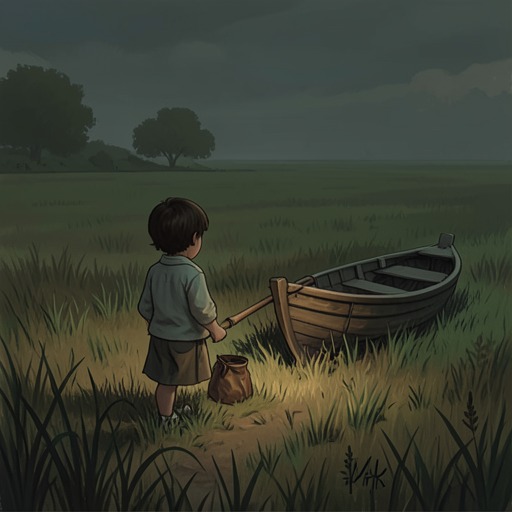
The next morning Harry led Joe up the wagon road to the schoolhouse and arranged with the teacher for him to sleep there in exchange for keeping the large stone fireplace supplied with chopped and split wood. From then on, Joe walked down the mountain before and after school to work for Mother Cleveland at the cookhouse. He earned breakfast and dinner by carrying trays of hotcakes and bacon in the morning and meat and potatoes in the evening to the miners’ dining hall, then returning the dirty dishes. After meals he climbed back to the schoolhouse to chop more wood, do his schoolwork, and sleep.
Isolation and the Meaning of Home
Joe could feed himself and manage his daily obligations, but his life narrowed into work, school, and solitude. There were no boys his age in the camp for him to befriend. He missed the companionship he had shared with Harry and Harry Junior: tossing a ball behind the cabin, roughhousing in the dust, and playing songs on the piano when Thula was out of earshot. He also missed private time with his father, including gin rummy at the kitchen table and learning about the Franklin’s engine as they worked beneath its hood.
Most painfully, Joe missed sitting with Harry on the cabin porch at night, watching the Idaho sky for falling stars. In the schoolhouse, he still watched the sky, but alone; the familiar act no longer felt the same. Boulder City therefore carried two sharply different meanings in Joe’s childhood: it had offered Harry a place to work and try to forget an earlier home, but within the camp Joe came to learn that a home could not be counted on to keep him.